Knee Osteoarthritis?
(OR POORLY REPAIR IT)
With MISHA System, an FDA-approved revolutionary technology that significantly reduces the painful effects of osteoarthritis
Over 50% of them are under 65 years old
Older patients had to choose between giving up their joint or living with the pain and limiting their activities.
Younger patients were not often candidates for arthroplasty and have few treatment options.
The MISHA Knee System bridges the osteoarthritis treatment gap helping patients preserve their knee joints while living healthy, active lives.
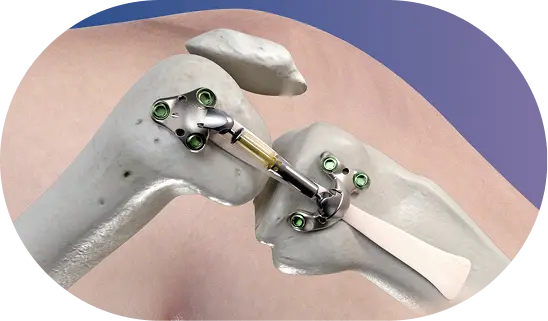
As shown in clinical studies, the MISHA device is an implantable shock absorber (ISA)
that reduces the peak forces on painful knee joints during activities such as walking,
running, or simply standing.
Unlike joint replacement surgery, none of the patient’s bone, ligament or cartilage is removed. This allows for a rapid recovery, and ensures future treatment options are still available.

Studies sites
include:
Think of cartilage on bone like frosting on a cake. When you lose the frosting (cartilage), you just have cake (bone). When the bone is not coated with healthy cartilage, most patients perceive significant pain, and this bone pain is called ARTHRITIS.
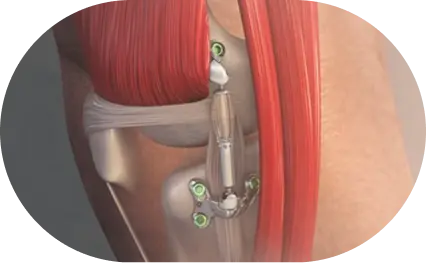
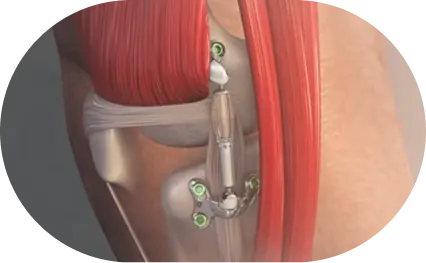
The MISHA Knee System offers an elegant mechanical solution to this problem: unloading the joint by utilizing an implantable shock absorber (ISA). The implant absorbs the pressure during weight-bearing, so the ends of the bone feel less pressure, hence the patient experiences less pain.
Knee load = 3x to 5×6
body weight with activity
30%
peak load reduction3
As the knee extends, the MISHA Knee System compresses and reduces peak stresses on the knee with every walking step.
As the knee flexes, the shock absorber relaxes and allows normal, smooth walking movement.
The MISHA Knee System treats patients with medial compartment knee osteoarthritis who:
Positive patient outcomes with implantable shock absorbers have been demonstrated in multiple prospective, multicenter clinical trials dating back to 2014. Key clinical evidence of the MISHA Knee system includes:
1
IDE study (Calypso)
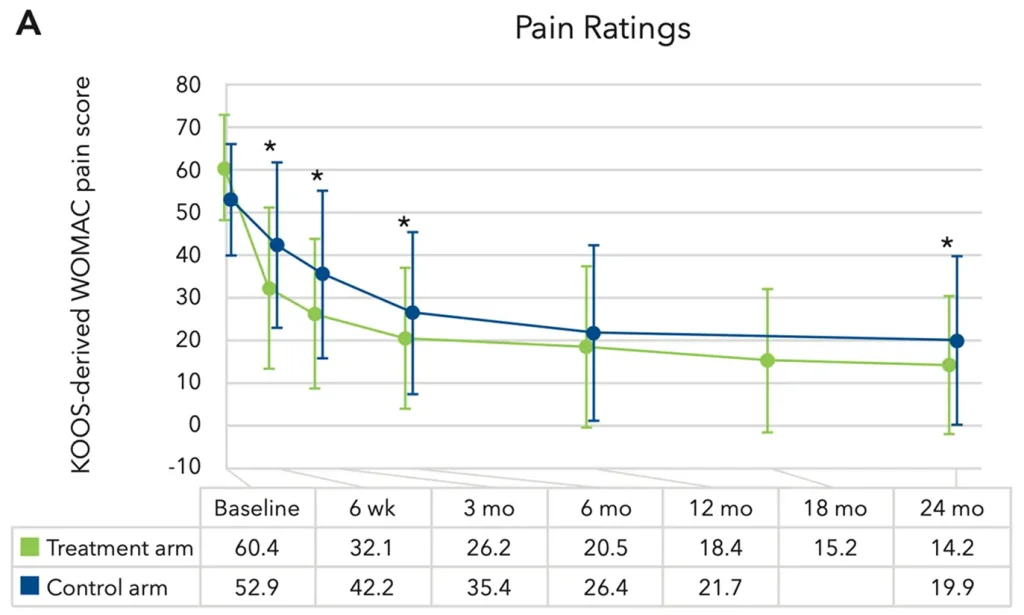
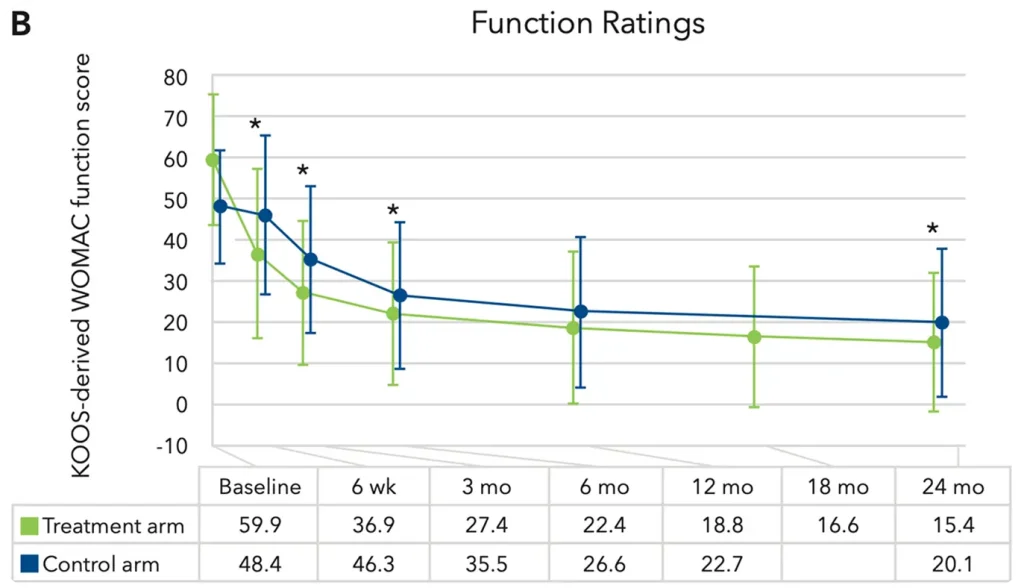
This was a prospective study that evaluated the safety and effectiveness of the MISHA Knee System compared against a historical control arm, high tibial osteotomy (HTO). The primary endpoint was based on a combination of 5 variables which included pain, function, specific adverse events, integrity of implant or hardware, and conversion to subsequent surgery.
PAIN RELIEF VS. BASELINE
FUNCTIONAL IMPROVEMENT VS. BASELINE
Treatment arm is the MISHA Knee System, and the control arm is HTO. Marker or bar heights represent means, error bars indicate SD, and * indicates a statistically significant difference between the arms (P < 0.05).
While all doctors should be doing this, the vast majority do not objectively measure and keep track of this data, so they don’t really know what about their treatments does and does not work.
Below are some examples of our team’s great results. Each tile displays a patient’s initial and latest follow-up scores, which are independently measured and authenticated by a software called OutcomeMD.
Lack of economic incentives and poor training account for why
most surgeons unfortunately decide to trim, remove or partially mitigate symptoms.
2
Diduch
A 2-Year Report. CARTILAGE. 2023;0(0). doi:10.1177/19476035231157335.
3
Gomoll
4
Pareek
5
Niinimaki
6
Meehan
7
Perdusa
8
Wainwright
9
Parvizi
10
Pareek A
11
Slynarski